
The Whisk and the Talking Stick: How Gloria Steinem Named Our Circles
By Judi Leib, Founder & CEO, Challah and Soul
I have a confession: I failed my daughters. When I told them I'd met Gloria Steinem, they looked at me blankly and asked, "Who is that?"
I did what any mother would do. I sat them down and explained that so much of the freedom they take for granted, the freedom to work, to vote, to be taken seriously, to simply be, exists because of women like Gloria. But even as I explained it, I knew the moment itself couldn't really be handed down. You had to be in the room.
I was in the room.
An Afternoon at Cherry Jubilee
It happened at Cherry Jubilee, hosted by Cherry Bombe, hands-down my favorite event in the food world. It's a gathering built almost entirely by and for women, though a few men wander through too. What I love most is how unguarded it is. You'll be reaching for a wine sample and realize Dori Greenspan is standing right next to you. Toni Tipton-Martin, Zoë François, Nara Smith, they're just there, no entourage, no velvet rope. Cookbook signings, food and beverage tastings, conversations that spill from one table to the next. It's the kind of place where you feel, almost immediately, like you belong.
And then Gloria came out.
She was there to be interviewed by her longtime biographer and friend, Amy Richards, and I swear the whole room held its breath at once. Then she started talking, and the breath turned into laughter, she was funny, disarming, and just plain brilliant. She told us, almost as an aside, that food had never been especially important to her. Women were what mattered to her. People were what mattered to her.
She talked about the brownstone she'd lived in for decades, the same one where so much of the real work happened. She had what she called an open-door policy, and it wasn't a figure of speech. Someone was always there. When a person showed up with the seed of an idea, Gloria wouldn't take it over or hand them a five-point plan. She'd just ask them to keep talking. And then she'd start connecting them to other people, quietly and persistently, until the idea had enough hands on it to actually happen.
Five Minutes That Became a Foundation
When she came off stage, I got my chance, five minutes, maybe less. I told her about Challah and Soul, about this idea we had of hosting councils, salons, gatherings where people could sit together and talk about the issues that actually divide us, in service of real change.
She said, "No."
Flat out. I was stunned. I asked her why.
"The people you want in that room," she told me, "will find 'council' and 'salon' too heady. Too intellectual. Call them talking circles."
I hesitated. "But Gloria, wouldn't that be cultural appropriation?"
She waved it off without missing a beat. "My best friend is an Indian princess. It's fine."
Then she told me about the talking stick, the tradition of passing an object around a circle so that whoever holds it has the floor, and everyone else has to listen. But she didn't think we needed a stick. She thought we needed a whisk. Because a whisk has spokes that fan out in every direction and yet all of them come from the same base. Different. Distinct. All moving the same direction, all attached to the same center.
What We Carried Home
That conversation lasted five minutes. It has shaped everything we've built since.
Our talking circles, the ones you'll find at the center of One Soul. Many Tables., Exodus Over Dinner, and every gathering we host, exist because Gloria Steinem told a stranger that "council" was the wrong word, and that the right container for hard, honest conversation wasn't a panel or a stage. It was a circle. Informal. Unhurried. Built for listening as much as speaking.
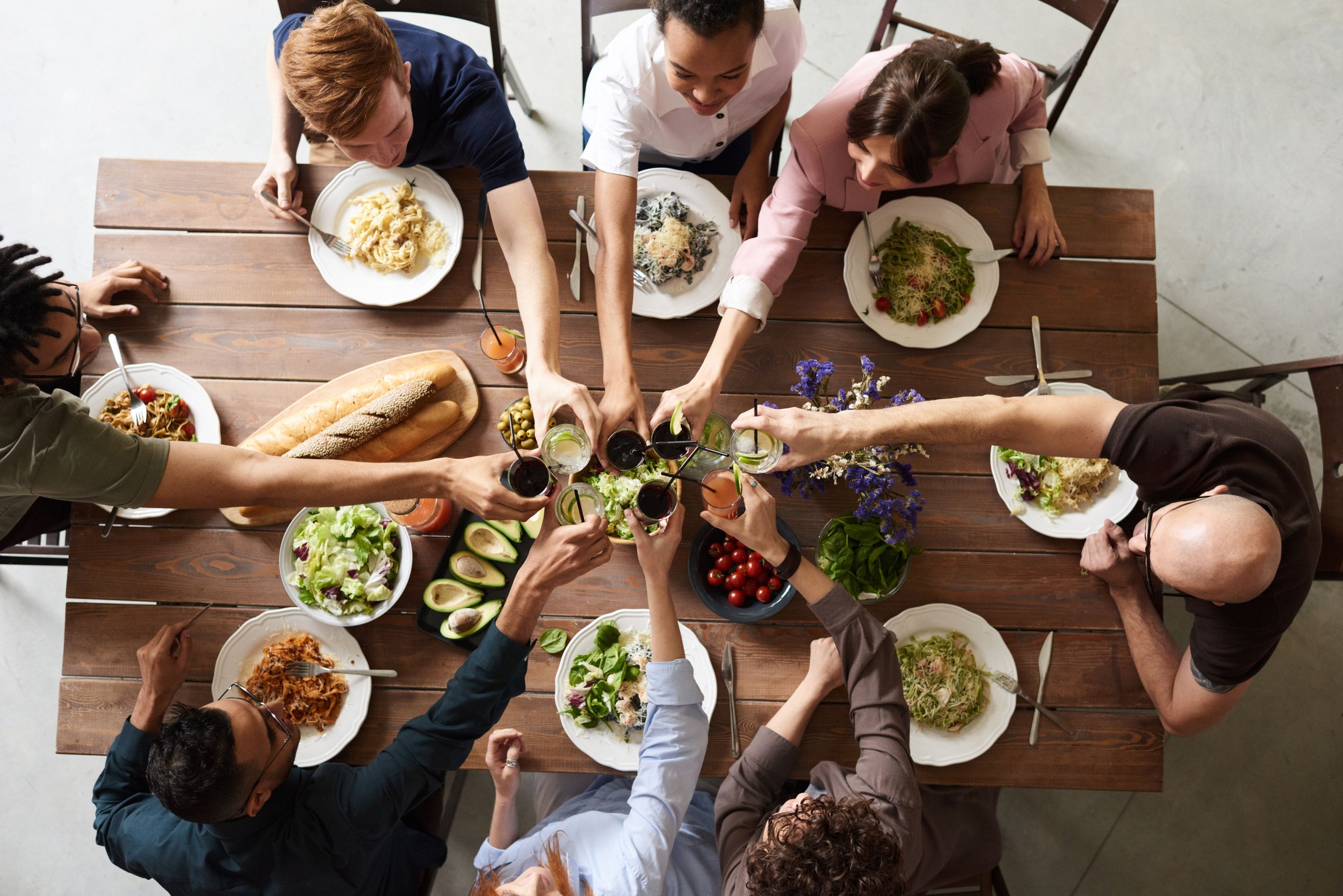
She never said food was her thing. But she understood, instantly and instinctively, exactly what we were trying to build with it, a table where people who don't usually sit together could stay long enough to actually hear one another.
My daughters may not have known who Gloria Steinem was that day. But they live, right along with the rest of us, inside the thing she helped name.
Every gift creates another opportunity for belonging.
Your generosity helps bring more communities together.